
Podcast Study Outlines Ways Radio Can Build Audience Loyalty.


Radio’s opportunity in podcasting starts with its talent, according to the final webinar in The Podcast Study 2026 series, which outlines ways broadcasters can use hosts, content and audience engagement to strengthen listener loyalty and create new revenue opportunities.
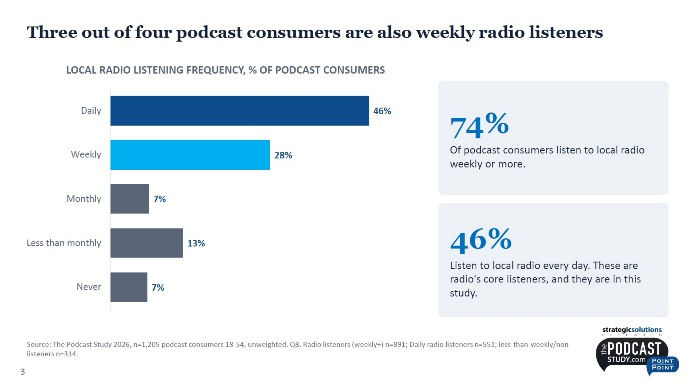
The study, based on 1,205 podcast consumers ages 18-54, finds that 74% listen to local radio weekly or more, including 46% who listen daily. That overlap gives radio broadcasters a substantial audience to reach with podcasts and other on-demand content, while the findings offer lessons for retaining listeners and attracting those who have drifted away from radio.
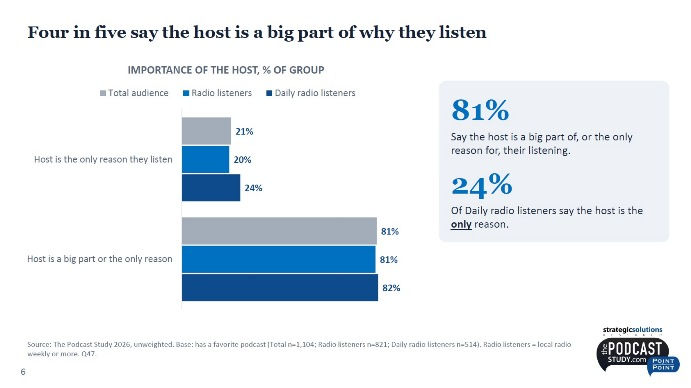
The research puts the host at the center of that opportunity. Among respondents with a favorite podcast, 81% say the host is a big part of or the only reason they listen. Among daily radio listeners, 24% say the host is the only reason they listen. Authenticity and connection with hosts also emerged as a leading theme in interviews about what listeners value in podcasts.
That connection carries over to advertising. Among daily radio listeners, 47% say host-read ads strongly influence their decision to try or buy a product, compared with 34% for pre-recorded ads. Among radio listeners overall, 54% say they are more likely to notice an ad following a host endorsement, 56% are more likely to remember the brand, 49% are more likely to trust the ad and 46% are more likely to consider buying.
Host reads may also help keep audiences through commercial breaks. The study finds that 36% of radio listeners say they listen through host-read ads because they enjoy the host. That figure rises to 62% among daily radio listeners.
But the research also flags advertising clutter as a concern. More than half of radio listeners who consume podcasts, 54%, say podcasts have too many ads, while 46% believe there are more ads than a year ago. One in five say they listen to podcasts less because of advertising. The findings suggest that broadcasters pursuing podcast growth need to balance monetization with the listening experience.
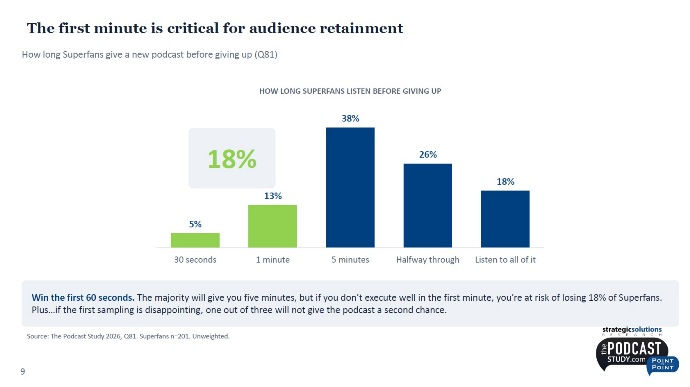
Content execution presents another opportunity. Among radio listeners, 55% give a new podcast five minutes or less before deciding whether to continue. Boring talk and too much meaningless discussion at the beginning are among the reasons listeners abandon a show. The study’s recommendation to radio is straightforward: coach talent to get to the point, particularly in the opening minute.
Discovery is another area where radio can apply lessons from podcasting. Friends and family are the leading discovery source among radio listeners, cited by 57%, followed by social media at 51%. The study says social media is three times as effective as an ad in another podcast at generating discovery. In addition, 65% of radio listeners typically see at least two clips before trying a new podcast, while 43% say recognizing or liking the host can prompt them to try a show.
The findings also point to opportunities to reengage lapsed radio listeners. Among podcast consumers who do not listen to local radio weekly, 75% have listened to radio before. Half of light radio users say they try new podcasts because of the host, suggesting that familiar talent distributed through podcast apps and social feeds could provide a way to reconnect with those audiences.
The study’s action plan for radio calls for investing in and promoting talent, giving listeners direct access to hosts, distributing talent through social feeds and podcast apps, selling host endorsements as a premium advertising product, improving content execution, posting clips daily and developing VIP clubs, host emails, exclusive content, events and limited-series podcasts.


Comments