
Comedy Delivers Young Listeners, But Analysis Finds Genre Defies Demographic Labels.


Comedy is already one of podcasting’s biggest genres. It is also home to the youngest audience in the medium. But a new analysis from Podchaser argues that advertisers looking to capitalize on that audience need to stop thinking about comedy as a single demographic and instead evaluate individual shows.
The report finds the median comedy podcast listener is about 29 years old vs. 32 across podcasts overall, making comedy the youngest of the major podcast genres. Podchaser says that makes comedy one of the most effective ways for advertisers to reach young adults — an audience many brands struggle to reach through traditional media.
But while comedy’s youth is remarkably consistent, its audience composition is anything but.
Across the genre, comedy audiences average about 44% female and 56% male. Yet Podchaser calls that figure “the most misleading of any genre” because virtually no individual comedy podcast actually reflects that split. Instead, the average is created by shows with dramatically different audiences.
Among the examples, “Kill Tony” has an audience that is about 9% female, while “The Joe Rogan Experience” is about 16% female using demographic figures come from Podchaser’s first-party panel data across the most-listened comedy podcasts as of July 2026. On the other end of the spectrum, “SmartLess” is about 52% female and “Call Her Daddy” reaches an audience that is roughly 62% female. Yet despite those differences, every show profiled attracts listeners primarily in their twenties, with the median listener ages ranging from 24 to 30.
“The genre sits near 44% female only because these opposites average out,” Podchaser says in the report. “That makes comedy the genre where buying on the category average is most likely to miss, and the genre where show-level data pays off most.”
The findings reflect what Podchaser sees as a broader shift in podcast advertising. Rather than relying on genre-level assumptions, the company argues advertisers should use title-level audience data to build campaigns. In comedy especially, selecting the right show can dramatically change who a campaign reaches, even while delivering the same coveted young-adult audience.
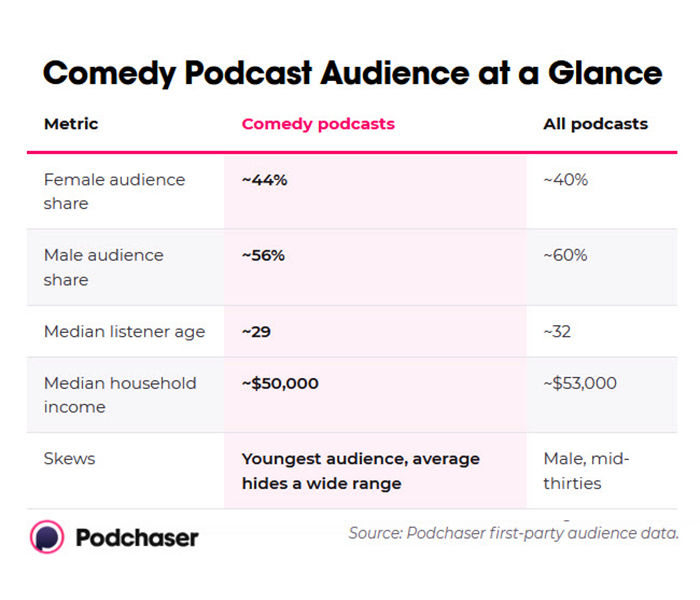
Beyond demographics, the report says comedy listeners also over-index on sports and music interests, creating additional opportunities for brands targeting entertainment and lifestyle consumers. While the median household income for comedy listeners is about $50,000 — slightly below the podcast average — the report says that reflects an audience that is earlier in its earning years rather than a lack of consumer appeal.
Comedy’s popularity with advertisers is already showing up in the marketplace. According to Magellan AI, six of the top 15 podcast advertisers made comedy podcasts their biggest buying category in June, helping cement the genre as one of podcasting’s premier advertising environments.
For marketers, Podchaser sees comedy as a strong fit overall for ad categories aimed at young adults, such as DTC and apparel, streaming and gaming, food delivery, alcohol, and consumer tech. Its recommendation is brands use comedy podcasts when age is the priority but rely on show-level audience data — not genre averages — to determine whether a campaign reaches men, women or a balanced audience.


Comments